
Playbooks
The Lead Response Audit
Run a practical audit from test inquiry to owner, response, booking and CRM disposition before adding more marketing spend.
Direct answer. To audit lead response, submit realistic test inquiries across the main entry points and follow each one through CRM creation, ownership, notification, prospect response, calendar booking and final disposition. Record timestamps, failures and duplicate records. Fix broken handoffs before increasing demand.
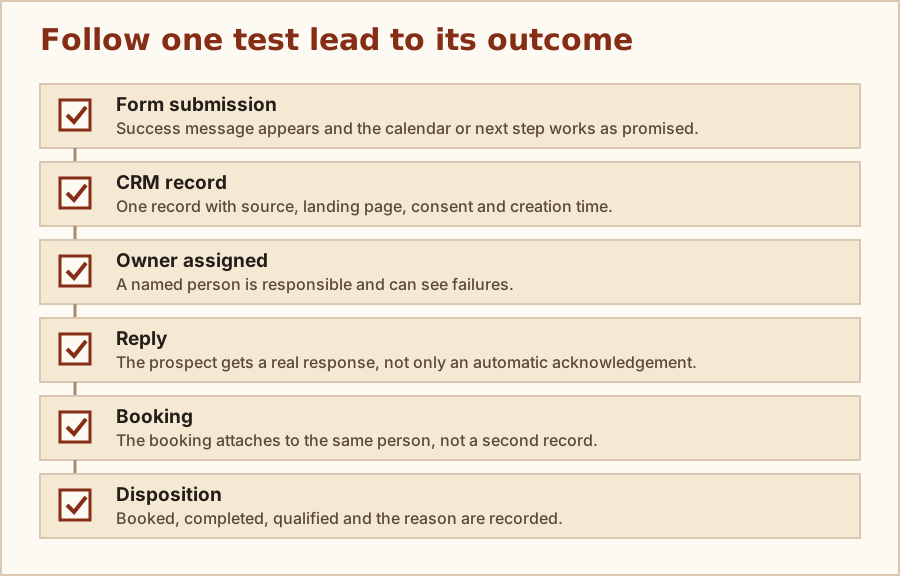
A dashboard can say a lead was created even when nobody was responsible for the next action. This playbook makes the actual path visible. Use test addresses and phone numbers that your team controls. Clearly mark the records as tests and remove or suppress them according to your data policy.
1. List the entry points
Include the main website form, strategy call, landing pages, direct phone number and any chat or third-party lead source in use. For each, write down the promised next step. A form that says “continue to calendar” must actually provide a working calendar when the submission succeeds.
Completion check: every active entry point has an expected destination, an owner and a way to recognize failures.
2. Send realistic test inquiries
Run one during staffed hours and one outside them. Test a complete inquiry, a missing required field, a duplicate contact and a source-tagged link. For consent choices, test both unchecked and checked states without implying permission that was not granted.
Completion check: expected success and error messages appear, and consent is recorded accurately.
3. Trace each record
Find the lead in the CRM. Confirm contact information, landing page, campaign identifiers when present, consent, creation time and assigned owner. Check whether the calendar booking attaches to the same person rather than a second orphan record.
Completion check: a reviewer can follow one lead ID from website to calendar to CRM without guessing.
4. Observe the human and automated response
Document the first notification and the first actual prospect-facing response. Verify that messages use the approved communication channel and that failures are visible to an owner. If a person requests a human, confirm that the handoff has a real path. Do not measure only an automated acknowledgement.
Completion check: the prospect received the promised next step and the assigned owner can see any failure.
5. Close the loop
Record whether the review was booked, completed and qualified, plus the disposition reason. Reconcile test and real records in a weekly exception report: missing owner, no response, duplicate, failed webhook, unsynced booking or unknown source. Assign one person to resolve each class of exception.
Completion check: the report can distinguish no demand from a broken response system.
Vaquero's CRM and marketing automation service addresses ownership, routing and follow-up design. The disconnected systems diagnosis maps the larger problem. For a directional look across the full system, use the Growth System Score.
Limit: This audit tests behavior at a point in time. Continue monitoring after integrations, forms or staff assignments change.